
More Power To You
By expanding Energy Transfer's existing Transwestern Pipeline system, the Desert Southwest Pipeline project will help ensure a consistent, reliable supply as communities and industries continue to grow in New Mexico and Arizona. For example, APS forecasts approximately 40% load growth by 2035 for Arizona alone, while existing natural gas pipelines serving Arizona are fully subscribed. Additional pipeline capacity is needed to serve power plants and maintain year-round reliability.

Reliable

Cost Effective

Clean

Abundant

Vital
Essential
Route Overview
The proposed route being surveyed follows existing infrastructure for 75% to 99% of its length, utilizing already established pathways wherever possible. This approach minimizes new land impact and streamlines construction throughout the region.

Construction Basics
Installed underground by specialized crews, then restored. The process is phased, efficient, and designed to minimize disruption.

For Landowners
Clear communication, defined timelines, and fair compensation guide every step from planning through restoration
- Fair market value for easements
- Clear timelines and communication
- Ongoing support throughout the project


Environmental Focus
Existing corridors are prioritized. Surveys guide the route. Disturbed land is restored after construction is complete.
Our Approach
Safety Systems
Every section is inspected, tested, and monitored. Built-in systems help detect issues early and respond quickly.
Learn About SafetyProject Timeline
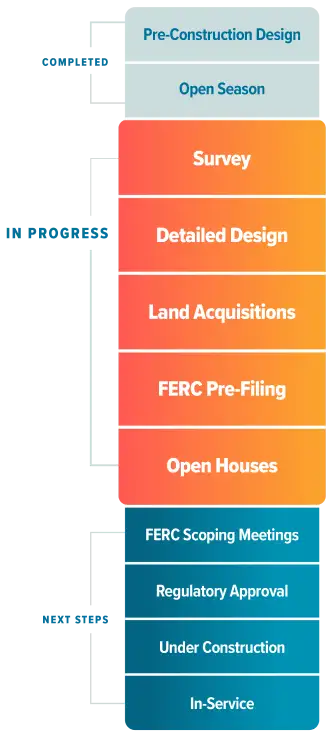
Currently in design and review. Construction is expected to begin in 2028, with service planned for 2029.

Regulatory Review
Federal and state agencies review and approve each phase before construction begins. Project filings, public notices, and updates can also be accessed through the Federal Energy Regulatory Commission (FERC) docket.

Project Q&A
What is the Desert Southwest Pipeline Expansion Project?
The Desert Southwest Pipeline Expansion Project is an interstate natural gas pipeline system that will transport up to 1.5 billion cubic feet per day (Bcf/d) of natural gas through approximately 516 miles of underground pipeline through Texas, New Mexico, and Arizona.
Additionally, the Desert Southwest expansion will make Transwestern’s Phoenix Lateral bi-directional, adding flexibility to move natural gas in both directions based on operational needs. The project also includes the installation of nine new compressor stations along the pipeline route.
Click here
When will construction start on the Desert Southwest Pipeline Expansion Project?
The project is currently in the design and regulatory review phase. Construction is expected to begin in 2028, with the pipeline in service by 2029.
What is the purpose of the Desert Southwest Pipeline Expansion Project?
The purpose of the Desert Southwest Pipeline Expansion Project is to increase the amount of natural gas brought into Arizona and New Mexico from the Permian Basin. The pipeline will deliver natural gas to utilities with growing populations that need additional supply to meet the demands for increased power and electric generation. This gas will be used to heat our homes, fuel our kitchens, and provide critical fuel supply to support our domestic manufacturing and electric generation supply chains.